
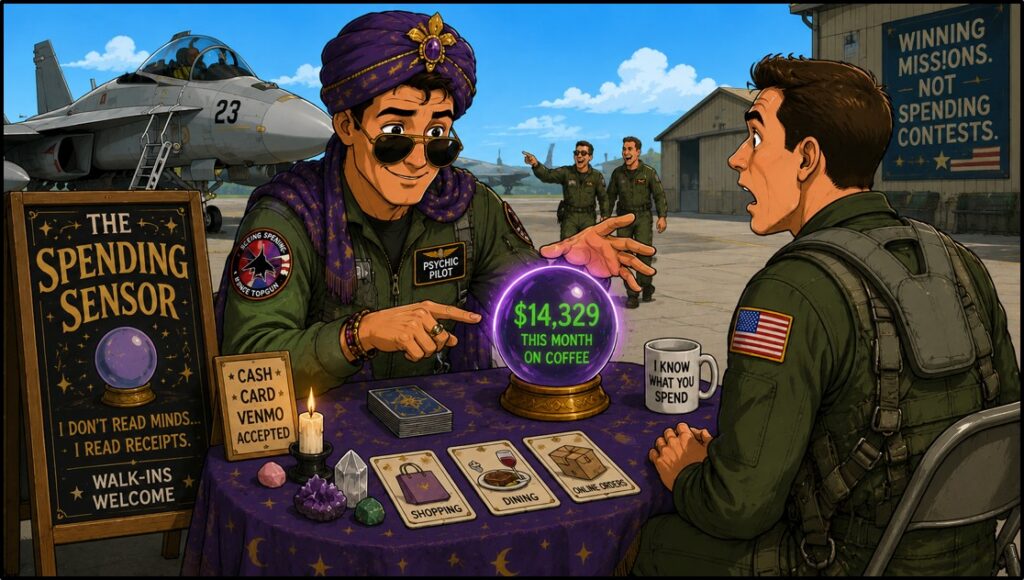
I Know How Much You Spend. Do You?
Of the hundreds of families I’ve served, there is a 99.99% common trait, and my family shares it too: we don’t know how much we spend. As virtuous as Davey Ramsey’s “plan and track” every nickel (since pennies aren’t a thing) advice is, it’s tedious at best. If we don’t know what we spend, it’s really hard to plan for the future, especially when the paycheck switch flips to the OFF mode.
Why We Don’t Track Spending
Even with slick tools like Monarch Money and other financial aggregators, you must review, categorize, process, and acknowledge every electronic transaction in a day/week/month/year. Most families have hundreds of transactions per month, and many transactions span multiple categories. Even if you’re a bookkeeper, you’d be getting paid to do this for someone else. Where’s the compensation for your time, energy, and attention when you track spending in your own home?
Reviewing spending induces lots of emotions, and few of them are “spender’s joy.” It’s all but impossible not to reflect on a month’s worth of spending without thinking things like:
“Where did it all go?”
“Did we really (need to) spend so much at Target/Amazon/Costco?”
“When did things get so expensive?”
“We probably need to start talking before we do some of this spending … and that’s probably an argument…”
Unless we’re one of those rare types who just likes having a tidy profit and loss statement for the household, tracking spending ranks right up there with cleaning gutters and picking weeds.
Here’s What You Spend
There is actually a really simple way to know what you spend, and it’s how I know what you spend.
Gross Income minus taxes minus savings, divided by 12.
In most cases, this really is the number. But let’s slice this elephant into some mouth-fitting chunks:
1. What was your gross income on your last tax return? Add any VA disability pay and, if you received any significant gifts, those amounts too.
2. What was your tax bill? This one is a little trickier because your 1040 tax form doesn’t show Social Security and Medicare taxes, so you’ll need to pull those numbers from your W-2s. Don’t forget state taxes, but those might be on Schedule A.
3. What did you save (and not pull back out of savings)? For a lot of us, this is two helpings of the IRA annual limit, plus some amount into the TSP/401(k) and maybe some college savings too. If you max out retirement savings and automate college savings, your only homework here might be a review of your year-end taxable brokerage account contributions.
Divide that number by 12, and that’s your average monthly spending.
Is It Really That Simple?
Yes and no. It might be helpful to parse out non-discretionary spending, such as mortgage/rent, insurance, education costs, and any charitable giving—expenses you’re probably going to fund in almost all circumstances. But everything else: food, transportation, clothing, utilities, shopping, subscriptions, personal care, pets, hobbies, travel, etc, it fits inside:
Gross Income minus taxes minus savings (minus must-spend spending), divided by 12.
If it doesn’t, we’re pulling money from savings to get through the year, carrying credit card balances, or taking out new loans. Those factors usually don’t escape our attention, so add them to the math if needed.
Does it Matter What We Spend?
No one is still reading unless they answer yes. So here’s why we probably want a decent sense of this number:
1. Are we saving enough? We save so we can spend later. We need to know spending now because it’s probably what we need to spend later. We need some compounding returns to help bridge this gap.
2. Are we saving too much? If we don’t spend much and we save a lot, we’ll probably have trapped gas because of compounding—we’ll have lots of money when we don’t have lots of health and energy in our 70’s+.
3. How much do we need to retire? This is really the same question, but if our current spending is $10K per month, we probably don’t want to tighten our belt in retirement—at least not in the early go-go years.
4. Can we afford to buy an “X?” If we want an RV/boat/vacation home, we need to know where the money comes from for it. Where is the “squish” in the spending that we can reallocate?
5. Is this okay? Sometimes we just want a sense of well-being from knowing that our money is going to the missions we support.
Cleared to Rejoin
Detailed dollar tracking isn’t for most of us, but we should know what we spend in a year to make sure our money takes care of our needs, wants, and some wishes, too. The math is bar napkin easy. Give it a shot. What do you think about your number?
Fight’s On!
Winged Wealth Management and Financial Planning LLC (WWMFP) is a registered investment advisor offering advisory services in the State of Florida and in other jurisdictions where exempted. Registration does not imply a certain level of skill or training.
This communication is for informational purposes only and is not intended as tax, accounting or legal advice, as an offer or solicitation of an offer to buy or sell, or as an endorsement of any company, security, fund, or other securities or non-securities offering. This communication should not be relied upon as the sole factor in an investment making decision.
Past performance is no indication of future results. Investment in securities involves significant risk and has the potential for partial or complete loss of funds invested. It should not be assumed that any recommendations made will be profitable or equal the performance noted in this publication.
The information herein is provided “AS IS” and without warranties of any kind either express or implied. To the fullest extent permissible pursuant to applicable laws, Winged Wealth Management and Financial Planning (referred to as “WWMFP”) disclaims all warranties, express or implied, including, but not limited to, implied warranties of merchantability, non-infringement, and suitability for a particular purpose.
All opinions and estimates constitute WWMFP’s judgement as of the date of this communication and are subject to change without notice. WWMFP does not warrant that the information will be free from error. The information should not be relied upon for purposes of transacting securities or other investments. Your use of the information is at your sole risk. Under no circumstances shall WWMFP be liable for any direct, indirect, special or consequential damages that result from the use of, or the inability to use, the information provided herein, even if WWMFP or a WWMFP authorized representative has been advised of the possibility of such damages. Information contained herein should not be considered a solicitation to buy, an offer to sell, or a recommendation of any security in any jurisdiction where such offer, solicitation, or recommendation would be unlawful or unauthorized.